Start with the current Controls menu, then use Learn or Practice before entering an Easy bot match. Your first goal in Ragdoll MMA is not a flashy knockout: learn to move, land a controlled strike, grab safely, complete one takedown, and finish a full three-round fight without spending all your stamina. The same route works whether you play Ragdoll MMA on Roblox against a bot or later move into Casual, Ranked, Wrestling, or 2v2.
Set up your first Ragdoll MMA session
Ragdoll MMA is a physics-based fighting game. Hits, grabs, falls, collisions, and balance changes affect the character as a physical body, so standing close and repeatedly attacking is less reliable than managing distance and timing. A useful first-session target is to perform one clean action in each part of the game: a stand-up exchange, a grab, a takedown, top control, and a recovery after a miss.
Open Controls before relying on a video or an old keybind list. The documented keyboard-and-mouse inputs include movement with W/S/D, the left mouse button for attacks, Space, G, X, and Q/E for combat actions, but the game is still being adjusted. If the current menu differs from an older guide, follow the in-game label. This prevents learning a stale input before you even reach the arena.
The full Ragdoll MMA controls reference pairs each reported input with a check to perform in Learn or Practice.
Then select Learn or Practice. Practice is the safer place to repeat a movement, grab, release, or takedown because you can focus on the physical response instead of trying to win. When you can regain your feet after a failed grab and can keep enough stamina for a second exchange, choose the Easy bot for your first complete match.
How a match moves from exchange to decision
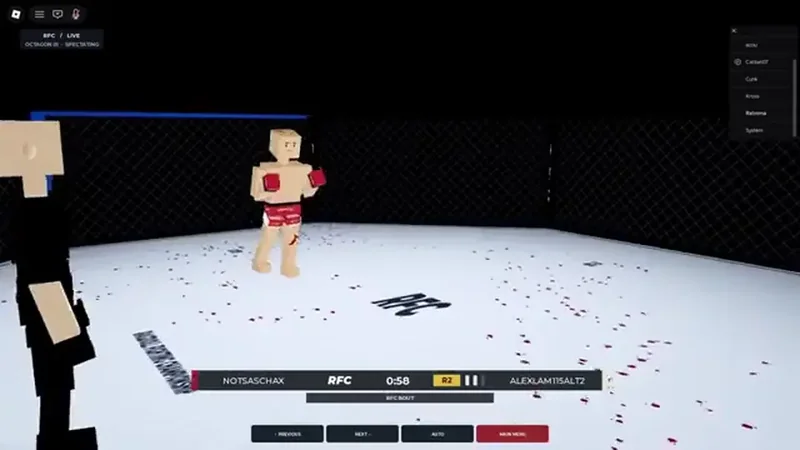
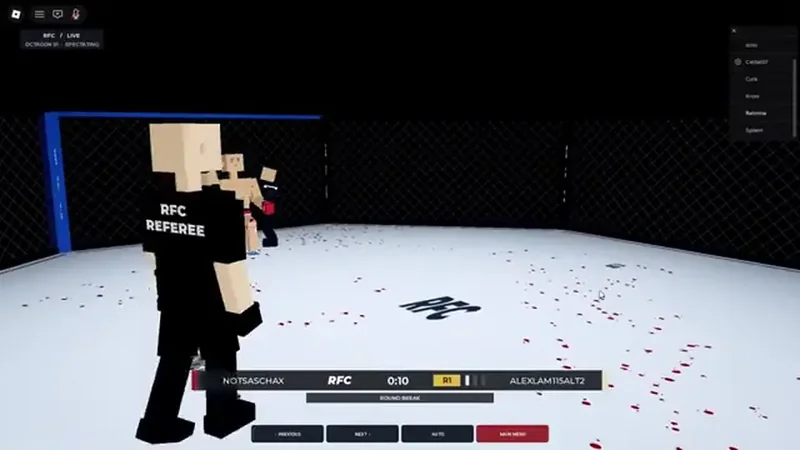
A standard match is session-based and round-based rather than a long progression path. You enter an arena, exchange strikes or grappling attempts, and each round lasts one minute. The fight ends early if a supported finishing outcome such as a Knockout occurs; otherwise, the match can continue through three rounds and reach a Scored Decision.
Each round moves through the same practical states: find range, create a safe opening, apply damage or control, respond to the opponent’s reaction, and reset when your position becomes poor. A strike can cause a stagger or knockdown, while a grab can move the fight from standing combat into a takedown and ground control. Being on top creates a chance to punch with one hand while holding the opponent, but it is not an automatic win because the grounded player can release, reverse, or change position.
Treat the three rounds as opportunities to adjust rather than as permission to attack constantly. In the first, observe how far the opponent reaches and how they respond to pressure. In the second, add a takedown or heavier kick when the opening is clear. In the third, keep initiative without chasing a finish that leaves your character off-balance. In 2v2, the structure is harder to read because target switching and teammate position matter; learn the one-on-one sequence first.
The systems that decide your first fight
- Controls menu: This is the current authority for movement, attacks, defense, grabs, dives, and releases. Check it before a match because controls and balance can change.
- Strikes: Punches, uppercuts, heavier punches, roundhouse kicks, and jumping kicks create damage or a knockdown opportunity. Use a strike after a miss or a bad approach instead of throwing continuously.
- Stamina: Attacks and physical actions consume a limited resource. Preserve it by stopping after a miss, repositioning, and waiting for a better opening; an exhausted fighter has fewer defensive and counterattack options.
- Grappling: A close-range grab connects standing combat to takedowns and ground fighting. The approach must be close enough to connect, but a failed grab leaves you vulnerable to a strike.
- Ground control: After a takedown, staying attached and reaching a top position lets you attack while controlling the opponent. Keep checking your position because releases and reversals can change who is on top.
- Body-part control: Arms, legs, the head, neck, and shoulders can be targeted during grappling. The physical posture affects what happens, so do not treat one input as a guaranteed submission formula.
- Knockout and injury outcomes: Effective attacks can lead to a Knockout, while sustained body-part control may produce fractures, dislocations, or a submission-style finish. A knockdown is feedback, not proof that the match is already over.
- Rounds and modes: The normal match uses three one-minute rounds. Easy, Medium, and Hard bots provide a progression for practice, while Casual, Ranked, Wrestling, and 2v2 change the pressure or focus.
Use these systems together. For example, stamina makes a missed strike matter, grappling gives that miss a possible close-range follow-up, and ground control determines whether the takedown becomes useful damage or only a brief fall.
Reviewing Ragdoll MMA match structure and combat options
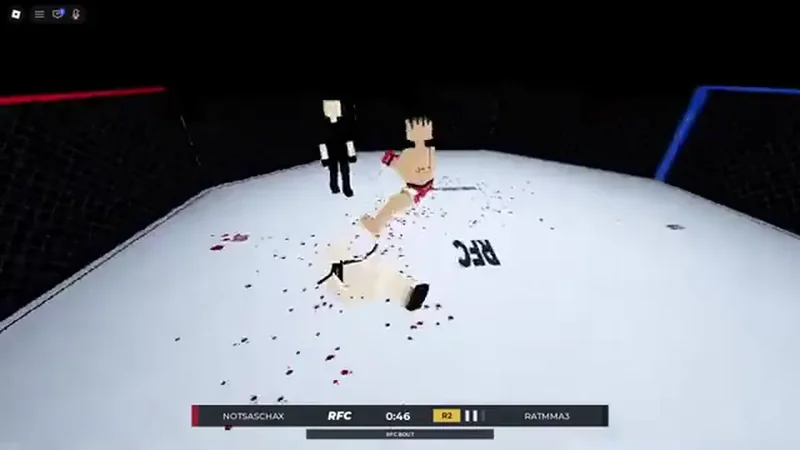
This moment connects the RFC rules overview to the three one-minute rounds, striking, grappling, ground-and-pound, bot difficulty, and Controls points in this section.

Your first complete fight
- Read the current inputs. From the main menu, open Controls and identify movement, attack, grab, release, and defensive actions. Do not start by memorizing a combo; you need to know how to stop holding an opponent and how to recover when a grab fails. Checkpoint: you can name the input you will use to grab and the input you will use to release.
- Test movement in Learn or Practice. Walk forward and backward, change your angle, and watch how the ragdoll body reacts to quick direction changes. Add a basic punch and kick with enough space to see the result. Checkpoint: you can return to a safe distance instead of standing directly in front of the target after an attack.
- Practice one defensive exchange. Let the practice target approach, then block, move away, or wait for the swing to miss before answering. Avoid empty attacks while you are still learning; the point is to feel the difference between a connected hit and a wasted action. Checkpoint: you retain stamina for another attempt after one miss.
- Connect a grab. Move into close range and use the current grab input, documented as G in the supplied control summary. Hold the connection long enough to recognize the opponent’s body movement, then release deliberately. Checkpoint: you can grab and release without treating the opponent as permanently pinned.
- Turn the grab into a takedown. In Practice, repeat the close approach and use the available leg or grappling action to bring the opponent down. Do not force the attempt from too far away. If the opponent stays standing, reset your distance and try again after a clearer opening. Checkpoint: the opponent is grounded and you remain attached rather than falling beside them.
- Work from top control. Keep one hand connected when the position allows it and use the other to attempt a ground punch. Watch for a release or reversal instead of holding the attack button without a plan. Checkpoint: you create one grounded hit, then stop to confirm your position.
- Attempt body-part control, then reset. If the opponent’s arm or another body part is available, practice changing your grip and attempting a submission-style control. The result depends on physical posture, so treat this as a positioning exercise, not a guaranteed finisher. Release or stand when your position becomes unsafe. Checkpoint: you can exit the ground exchange and return to standing combat.
- Choose the Easy bot. Enter a full match and apply the same order: move, wait for an opening, strike, grab only when close, and use a takedown when the approach is controlled. In the first minute, prioritize reading range over a finish. Checkpoint: you reach the end of the first round with stamina available.
- Adjust across the remaining rounds. In round two, add a takedown after a missed or overextended attack. In round three, keep pressure when you are balanced, but reset after a failed grab or a knockdown that does not finish the match. Checkpoint: you either secure a supported finish or complete all three rounds for the decision.
Practicing the grab, takedown, and top-control sequence
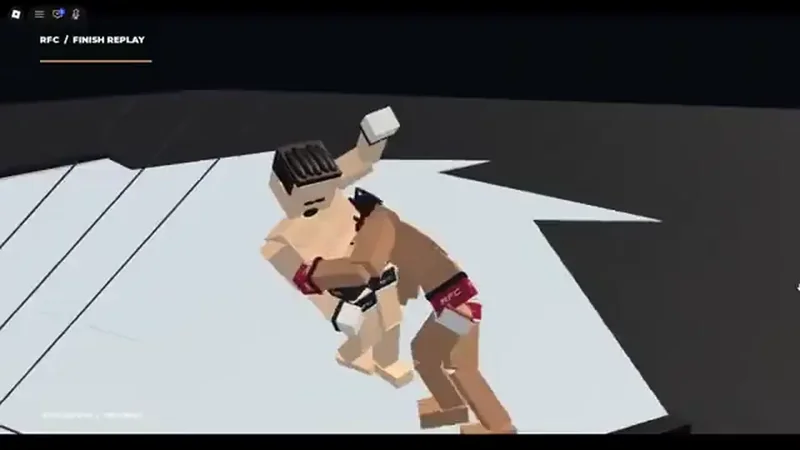
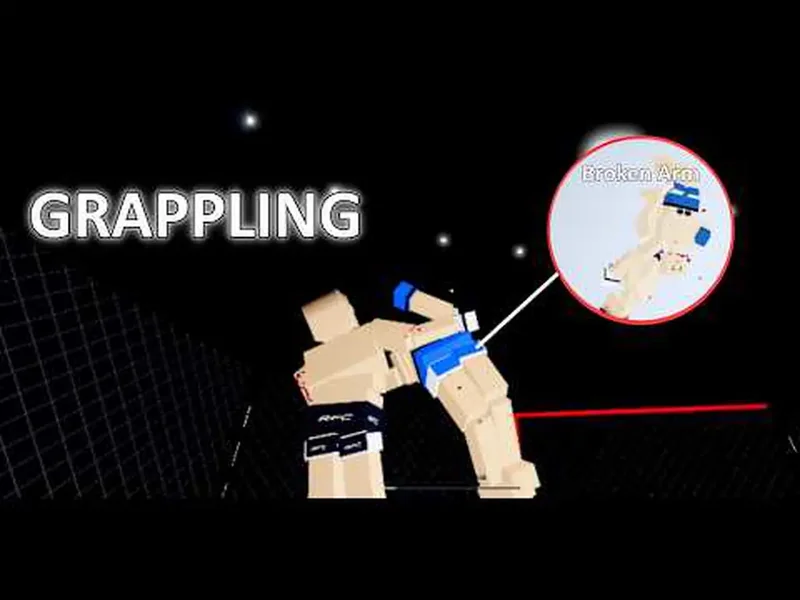
This walkthrough shows the grab-to-ground sequence described in the complete-fight steps: press G to grab, take the opponent down, hold top control, punch, and attempt a submission.

After the Easy bot, repeat the same sequence against Medium, then Hard, before testing a real player. Choose Wrestling when you want concentrated grappling practice; the mode comparison separates that focus from Casual, Ranked, and 2v2 pressure. Leave Ranked and 2v2 until you can identify your own position quickly; those modes punish confusion more than a missed practice input.
Priorities and recovery when the physics go wrong
- Position before volume. Stay at a range where you can see the opponent’s approach. If you keep getting hit while attacking, stop swinging, step away, and wait for the next miss.
- Stamina before a desperate finish. If repeated attacks leave you unable to defend, disengage and let the exchange reset. A slower second attempt is safer than a final empty swing.
- A connected grab before a takedown. If a dive or takedown misses, do not chase the falling body from a bad angle. Stand up, turn toward the opponent, and re-enter only when you are close enough to control the contact.
- Top position before ground damage. If you fall underneath the opponent, release what you can, create space, and work back to standing or a better grip. If you are on top but losing control, stop attacking and re-secure your position.
- The round clock before panic. A knockdown does not automatically equal a Knockout. Check whether the opponent can continue, then choose a safe follow-up instead of assuming the fight is finished.
- The current menu before old advice. If a video uses different controls, return to Controls and translate the action rather than copying the old key. The game is still changing, so the current interface matters more than a remembered binding.
Ragdoll MMA becomes easier to read when every mistake has a next action: miss and reset, lose stamina and disengage, fail a grab and rebuild distance, lose top control and recover, or reach the final round and protect your balance. Once that sequence feels natural, add harder bots, human matches, or team play without changing the fundamentals.
First-time Ragdoll MMA questions
What should I do before my first Ragdoll MMA match?
Open the current Controls menu, then practice movement, attacks, defense, grabbing, releasing, and one takedown in Learn or Practice. Start your first complete match against the Easy bot so you can learn the three-round structure without immediately facing the pressure of Ranked or 2v2.
How long is a Ragdoll MMA match?
The standard structure is three rounds of one minute each. A Knockout or another supported finishing outcome can end the fight earlier; if nobody is finished, the match can reach a Scored Decision.
Is a Knockout guaranteed after a knockdown?
No. A knockdown is a change in the opponent’s state and may create a finishing opportunity, but it is not the same as a completed Knockout. Confirm that the opponent cannot continue before treating the fight as finished.